Complete Ledger Hardware Wallet Review for Security-Focused Cryptocurrency Investors
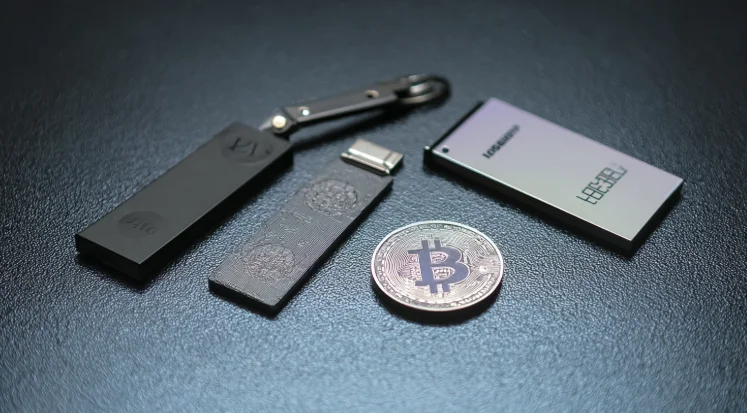
Selecting a hardware wallet means entrusting a manufacturer with the security architecture protecting your entire cryptocurrency portfolio. Among available options, Ledger has established itself as the dominant market leader through a decade of continuous development, independent security certifications, and an ecosystem supporting thousands of digital assets. This comprehensive ledger hardware wallet review examines everything prospective buyers need to understand—from the Secure Element technology protecting private keys to practical model comparisons helping you select the optimal device for your specific requirements.
Whether you're evaluating your first ledger hardware crypto wallet purchase or comparing models for an upgrade, this guide provides the technical depth and practical insights necessary for informed decision-making. For a broader comparison of cold wallet options, see our comprehensive guide.
Why Ledger Hardware Crypto Wallet Dominates the Market
Ledger's market leadership reflects more than first-mover advantage or marketing expenditure. The French company has consistently invested in security research, obtained independent certifications validating protective claims, and developed proprietary technologies that competitors struggle to replicate. Understanding this foundation helps explain why millions of users trust Ledger devices with billions in combined cryptocurrency value.
Company background and decade-long security track record
Founded in Paris in 2014, Ledger emerged from a team combining deep cryptography expertise with consumer electronics experience. The founders recognized early that cryptocurrency adoption required security solutions accessible to mainstream users—not just technically sophisticated early adopters comfortable managing air-gapped computers and paper wallet complexity that dominated early Bitcoin storage approaches.
This vision drove development of the original Ledger Nano, establishing the compact USB-device form factor that defined the hardware wallet category and influenced every subsequent competitor. Subsequent iterations refined the concept while maintaining backward compatibility and consistent security standards across product generations. The company has since expanded beyond consumer devices into enterprise custody solutions, institutional security consulting, and the comprehensive Ledger Live software ecosystem.
Ledger's track record includes important context for any balanced ledger hardware wallet review. While no hardware wallet has suffered remote private key extraction compromising user funds, the company experienced a 2020 customer database breach exposing contact information used for marketing purposes. This incident—affecting corporate marketing data rather than device security architecture—prompted significant infrastructure improvements and reinforced the crucial distinction between corporate data security and cryptographic device protection.
Certified Secure Element chip technology explained in detail
The foundation of every Ledger device is a Secure Element chip—specialized hardware designed specifically to protect sensitive cryptographic operations against sophisticated attack attempts. Unlike general-purpose processors in computers and smartphones, Secure Elements incorporate physical tamper resistance, encrypted memory, and architectural protections against side-channel attacks that might leak key material through power consumption analysis or electromagnetic emission monitoring.
Ledger sources chips meeting rigorous certification standards, including Common Criteria evaluations reaching EAL5+ and EAL6+ levels depending on the specific model. These certifications involve independent laboratory testing of attack resistance, providing third-party validation beyond manufacturer marketing claims that competitors may not match.
The Secure Element generates and stores private keys internally, never exposing raw key data to connected computers or even to other components within the Ledger device itself. Transaction signing happens within this protected environment, with only completed signatures emerging—attackers who somehow compromise companion software on connected devices cannot extract keys from the isolated chip architecture regardless of their sophistication.
How proprietary BOLOS operating system isolates each application
Ledger developed BOLOS (Blockchain Open Ledger Operating System) specifically for cryptocurrency security requirements that general-purpose operating systems cannot adequately address. This proprietary system runs on ledger hardware wallet devices, managing application execution within carefully controlled environments designed for maximum isolation.
BOLOS implements strict isolation between cryptocurrency applications running on the same device. Each blockchain-specific app—Bitcoin, Ethereum, Solana, and dozens more—operates independently without access to other applications' data or operations. Malicious or compromised applications cannot affect others or access underlying key material directly through the isolation boundaries BOLOS enforces.
This architecture enables Ledger's extensive multi-currency support while maintaining security compartmentalization throughout. Installing a new altcoin application creates no additional risk to existing holdings—the isolation boundaries ensure that vulnerabilities in one application cannot propagate to others running on the same device.
Ledger Hardware Wallet Review of Available Models
Ledger's current lineup spans from affordable entry devices to premium touchscreen models, each addressing different user priorities and budgets. Understanding the distinctions helps match device capabilities to your specific requirements without overspending on unnecessary features or underspending on needed functionality.
Nano S Plus as the affordable entry-level option
The Nano S Plus delivers core Ledger security at the most accessible price point in the lineup. This USB-C connected device incorporates the same Secure Element protection as premium models, providing identical cryptographic security for users prioritizing value over additional convenience features.
The compact form factor includes a small OLED screen for transaction verification and two physical buttons for navigation and confirmation. Storage capacity supports installing multiple cryptocurrency applications simultaneously—a significant improvement over the original Nano S that required swapping apps for different assets due to limited memory.
Without Bluetooth connectivity, the Nano S Plus requires physical USB connection for all operations. This limitation proves irrelevant for users who primarily transact from desktop computers, making the reduced price genuinely cost-effective rather than falsely economical through compromised protection.
Nano X with Bluetooth connectivity for mobile users
The Nano X adds Bluetooth wireless connectivity and internal battery, enabling mobile device pairing without cable connections. This capability transforms the usage experience for users who prefer managing cryptocurrency from smartphones rather than desktop computers.
Bluetooth connectivity raises understandable security questions that Ledger addresses through architectural design maintaining protection regardless of connection method. The wireless connection transmits only transaction data for display and signed transactions for broadcast—private keys never leave the Secure Element regardless of how data reaches the device. The Bluetooth channel itself receives encryption, but even compromised wireless communications cannot extract key material that never transmits.
The internal battery provides approximately eight hours of active use, with standby time extending significantly longer between charges. Regular charging maintains readiness for mobile transactions while the device functions identically to USB-only models when connected directly for desktop usage.
Flex and Stax premium touchscreen experiences compared
Ledger's premium tier replaces button-based navigation with touchscreen interfaces, fundamentally transforming the interaction model for users who value intuitive operation. The Flex features a 2.8-inch E Ink display, while the flagship Stax offers a larger 3.7-inch curved screen with wireless charging capability.
E Ink technology provides always-visible displays without battery drain, showing security information and transaction details with paper-like clarity even in bright sunlight. Touch interfaces enable intuitive navigation through portfolios, transactions, and settings—particularly valuable for users managing diverse holdings across many blockchain networks.
These premium models also implement Trusted Display technology, where transaction details render directly on the Secure Element-controlled screen. This prevents sophisticated attacks where compromised companion software might display different information than what the device actually signs—an additional security layer beyond what button-based models provide.
Ledger Hardware Crypto Wallet Model Specifications
| Model | Price | Display | Connectivity | Battery | Supported Assets |
|---|---|---|---|---|---|
| Nano S Plus | $79 | 128×64 OLED | USB-C | No | 5,500+ |
| Nano X | $149 | 128×64 OLED | Bluetooth/USB-C | Yes | 5,500+ |
| Flex | $249 | 2.8" E Ink Touch | Bluetooth/USB-C | Yes | 5,500+ |
| Stax | $399 | 3.7" Curved E Ink | Wireless/Bluetooth | Yes | 5,500+ |
| Nano Gen5 | $179 | 2.76" E Ink | Bluetooth 5.2/NFC | Yes | 5,500+ |
Ledger Hardware Wallet Security Architecture Deep Dive
Beyond Secure Element foundations, Ledger implements multiple overlapping security layers that collectively protect against diverse threat categories. Understanding these protections helps users appreciate the comprehensive defense their devices provide and forms the core of any thorough ledger hardware wallet review.
EAL6+ certification and real-world protection implications
Common Criteria Evaluation Assurance Levels provide standardized security certification recognized globally for sensitive applications including government, military, and financial systems. EAL6+ certification—achieved by Ledger's latest Secure Element chips—represents near-maximum rigor, exceeded only by EAL7 reserved for the most critical national security applications.
This certification involves extensive independent testing by accredited laboratories examining both design documentation and physical attack resistance under controlled conditions. Evaluators attempt various compromise techniques including power analysis, fault injection, and physical probing—sophisticated methods that well-resourced attackers might employ against stolen devices.
For users, EAL6+ certification provides independent validation that ledger hardware crypto wallet security claims reflect genuine technical capabilities rather than marketing assertions alone. The certification process requires significant investment, demonstrating manufacturer commitment to verifiable protection that competitors may not match.
Clear Signing technology preventing blind transaction approval
Traditional hardware wallet interfaces display raw transaction data—hexadecimal strings and technical parameters meaningful only to developers with blockchain expertise. Users confirming such transactions essentially sign blindly, trusting that companion software accurately represents what they're actually approving.
Ledger's Clear Signing technology transforms this experience by parsing transaction data and displaying human-readable information: recipient addresses in full, token amounts in familiar denominations, contract interactions explained clearly, and potential risks highlighted prominently. Users see exactly what their signature authorizes before confirmation.
This capability proves particularly valuable for DeFi interactions where complex smart contract calls might otherwise obscure actual operations being authorized. Clear Signing reveals whether transactions involve expected token transfers, suspicious permission grants, or potentially malicious operations—enabling genuinely informed approval decisions rather than trust-based confirmations.
Ledger Hardware Crypto Wallet Security Layers
- Secure Element chip generates and stores private keys in complete isolation
- Custom BOLOS operating system runs each cryptocurrency app separately
- PIN protection automatically wipes device after consecutive failed attempts
- 24-word recovery phrase enables wallet restoration on any compatible device
- Clear Signing displays complete transaction details before user approval
- Firmware attestation process verifies only authentic updates install
- Physical button confirmation required for every outgoing transaction
- Optional passphrase creates additional hidden wallet protection layer
Physical tamper protection and key extraction resistance
Ledger hardware wallet security extends beyond digital protections to physical tamper resistance designed to defeat sophisticated attackers with device possession. These features matter primarily for users facing elevated physical security threats, though they provide baseline protection for all users against various attack scenarios.
Secure Element chips incorporate multiple tamper detection mechanisms responding to intrusion attempts. Metal shielding prevents direct probe access to internal circuitry. Light sensors detect case opening attempts that might precede physical attacks. Voltage and temperature monitors identify fault injection attacks attempting to induce exploitable errors through environmental manipulation.
Device construction quality affects physical security significantly beyond chip-level protections. Ledger's premium models feature robust casings that resist opening attempts while maintaining elegant design aesthetics. Tamper-evident packaging reveals any attempted intrusion during shipping before users initialize devices with their own keys.
Managing Digital Assets Through Ledger Wallet Application
Beyond security fundamentals, Ledger Live software provides comprehensive portfolio management capabilities that transform hardware wallets into complete cryptocurrency management systems. This ledger hardware wallet review section examines practical functionality beyond core protection features.
Portfolio tracking with real-time market valuations
Ledger Live aggregates all holdings across supported blockchains into unified portfolio views accessible from desktop and mobile applications. Real-time price feeds display current valuations in preferred fiat currencies, with historical charts showing performance over customizable timeframes from days to years.
The dashboard presents total portfolio value alongside individual asset breakdowns, percentage allocations, and daily performance metrics clearly organized. Users managing diverse holdings across multiple blockchain networks can assess their complete position without switching between chain-specific explorers or third-party tracking services.
Customizable price alerts notify users when assets reach specified thresholds—useful for monitoring market conditions without constant manual checking throughout trading sessions. These notifications can trigger buy or sell considerations while maintaining the cold storage security of holding keys on hardware devices.
Built-in swap staking and DeFi connectivity features
Ledger Live integrates third-party services enabling direct asset exchanges without transferring to external platforms that introduce counterparty risk. Swap functionality compares rates across multiple providers, executing exchanges while private keys remain on your Ledger device throughout the entire process.
Staking integration enables earning rewards on proof-of-stake assets directly through Ledger Live without compromising security. Supported networks include Ethereum, Solana, Cosmos ecosystem chains, and numerous others offering staking rewards. Importantly, staked assets remain under your key control—Ledger facilitates the staking delegation without taking custody of your cryptocurrency.
These integrated features eliminate common security risks associated with using external platforms for similar functions. Every operation confirms on the hardware device itself, maintaining the protection that motivated hardware wallet adoption while enabling sophisticated portfolio management typically requiring multiple platforms.
Ledger Hardware Wallet Features Overview
- Purchase crypto directly using credit card or bank transfer
- Swap tokens instantly through integrated exchange partners
- Stake supported assets while keeping private keys on device
- Track portfolio performance with customizable price alerts
- Connect to DeFi protocols through WalletConnect integration
- Manage NFT collections stored on Ethereum and Polygon networks
- Access 50+ third-party wallet integrations including MetaMask
- Earn rewards through native staking without moving funds
Third-party integrations expanding ledger hardware wallet functionality
Modern DeFi participation requires wallet connections to decentralized applications—interactions that hardware wallets historically complicated significantly through cumbersome workflows. Ledger addresses this through extensive third-party compatibility enabling secure DeFi access across the entire ecosystem.
WalletConnect integration allows ledger hardware crypto wallet signing for virtually any compatible decentralized application regardless of blockchain network. Connect your device through Ledger Live, then interact with lending protocols, decentralized exchanges, and yield opportunities while transaction approval happens on your secure hardware rather than vulnerable software wallets.
MetaMask integration proves particularly valuable for Ethereum ecosystem participants, connecting the ubiquitous browser wallet to Ledger device security seamlessly. This combination provides MetaMask's convenient interface and broad DeFi compatibility with Ledger's Secure Element protection—effectively upgrading software wallet convenience with hardware wallet security for optimal balance.
Choosing the Right Ledger Model for Your Needs
Selecting among Ledger models requires matching device capabilities to your actual usage patterns and priorities honestly. This ledger hardware wallet review section helps identify the optimal choice for your specific situation without overspending or underserving your requirements.
Budget considerations and feature value analysis
The Nano S Plus at $79 provides complete Ledger security for users satisfied with USB connectivity and button-based navigation. This represents genuine value rather than compromised protection—the Secure Element and BOLOS architecture remain identical to premium models costing five times as much.
Moving to the $149 Nano X adds Bluetooth connectivity and battery, enabling mobile device usage without cables. Users who prefer smartphone-based cryptocurrency management will find this premium worthwhile; desktop-focused users gain relatively little practical benefit from the additional investment.
Premium touchscreen models at $249-$399 fundamentally change the interaction experience but provide equivalent underlying security to entry-level options. The investment makes sense for users managing complex portfolios who value intuitive interfaces, or those who simply prefer premium hardware experiences across their technology choices.
Matching device capabilities to your usage patterns
Consider your typical transaction scenarios honestly when selecting models. Desktop-primary users managing occasional transactions find the Nano S Plus entirely adequate for their actual needs. Mobile-first users requiring regular smartphone access should prioritize Bluetooth-equipped models despite higher cost.
Portfolio complexity also influences optimal selection significantly. Users holding primarily Bitcoin with occasional altcoin exposure need less interface sophistication than active DeFi participants managing dozens of tokens across multiple chains simultaneously. Touchscreen navigation proves increasingly valuable as portfolio complexity grows.
Transaction frequency matters similarly for model selection. Occasional long-term holders accessing devices monthly face different requirements than active traders executing multiple transactions daily. Higher activity levels increase the value of streamlined interfaces that reduce friction across numerous operations.
When premium touchscreen models justify higher investment
Premium ledger hardware wallet models justify their cost for specific user profiles worth identifying. Users with significant holdings may reasonably prioritize the superior interface experience and latest security features, viewing the price difference as negligible relative to protected asset values.
Professional use cases—cryptocurrency businesses, fund managers, or frequent DeFi participants—benefit substantially from touchscreen efficiency and Clear Signing capabilities across numerous daily transactions. Time saved across operations accumulates meaningfully over typical device lifespans measured in years.
The Trusted Display technology in premium models renders transaction details directly on the Secure Element-controlled screen, preventing sophisticated attacks where compromised companion software might display different information than what the device actually signs. This additional assurance may matter significantly for users with elevated threat profiles.
Frequently Asked Questions
No. Bluetooth connectivity on Ledger devices transmits only transaction data and signed outputs—private keys never leave the Secure Element regardless of connection method used. Even if attackers somehow intercepted Bluetooth communications entirely, they would capture only publicly-broadcastable signed transactions, not the keys enabling future signatures. The architectural security model remains completely intact across all connection types, with Bluetooth providing convenience without security compromise.
The Nano S Plus at $79 delivers identical Secure Element protection and BOLOS isolation as premium models, making it the optimal value choice for security-focused users who don't require Bluetooth connectivity or touchscreen interfaces. The cryptographic protection—the core purpose of hardware wallets—remains equivalent across the entire lineup. Premium models add convenience features rather than security improvements, making entry-level devices excellent value for most users.
Yes, through multiple approaches providing flexibility. A single device can generate multiple accounts within each cryptocurrency application, maintaining organizational separation for different purposes. Alternatively, the optional passphrase feature creates entirely separate wallet sets—entering different passphrases accesses different portfolios from the same seed phrase. This enables maintaining distinct holdings for different purposes while using one physical device efficiently.
Your cryptocurrency remains completely accessible regardless of Ledger's business continuity status. The 24-word recovery phrase generated during setup follows BIP39 industry standards—any compatible wallet software or competing hardware device can restore access using your seed phrase. Ledger Live software functionality might eventually degrade without company support, but numerous alternative interfaces exist for managing standard seed phrases. Self-custody means your keys work independently of any company's survival.
Update firmware whenever manufacturers release security patches—typically checking quarterly provides reasonable protection for most users. Companion applications usually notify users about available updates automatically upon device connection. While outdated firmware rarely enables remote exploitation due to cold wallet architecture, prompt updates close known vulnerability paths and incorporate latest security improvements available from Ledger's ongoing development efforts.
Related Articles
- How Cryptocurrency Cold Wallet Technology Keeps Your Digital Assets Safe From Hackers
- Expert-Ranked Best Offline Wallet Options for Secure Cryptocurrency Storage
- Complete Comparison Guide for Hardware Crypto Wallet and Storage Options
- Complete Guide to Cold Storage for Bitcoin Using Secure Offline Methods